Most advice about organizing photos starts the same way: create a folder structure, rename files with dates and events, add keywords, delete duplicates. It is good advice. It is also a project nobody with 80,000 photos ever finishes.
This guide offers a different approach: organize photos on your computer by making them searchable, so the mess stops mattering.
0 hours a year spent looking for files - with a search that takes a second, that is about 0 working days back.
The classic method (and why it stalls)
The traditional system has three parts:
- Folders by year and event -
2024/2024-07 Beach trip. - File names with dates -
2024-07-14_beach_001.jpg. - Keywords and tags added in a photo manager.
It works beautifully for the first few hundred photos. Then life happens: phone backups land in one giant folder, a laptop dies and its photos get copied "somewhere safe", and every new device brings its own naming scheme.


The no-renaming method
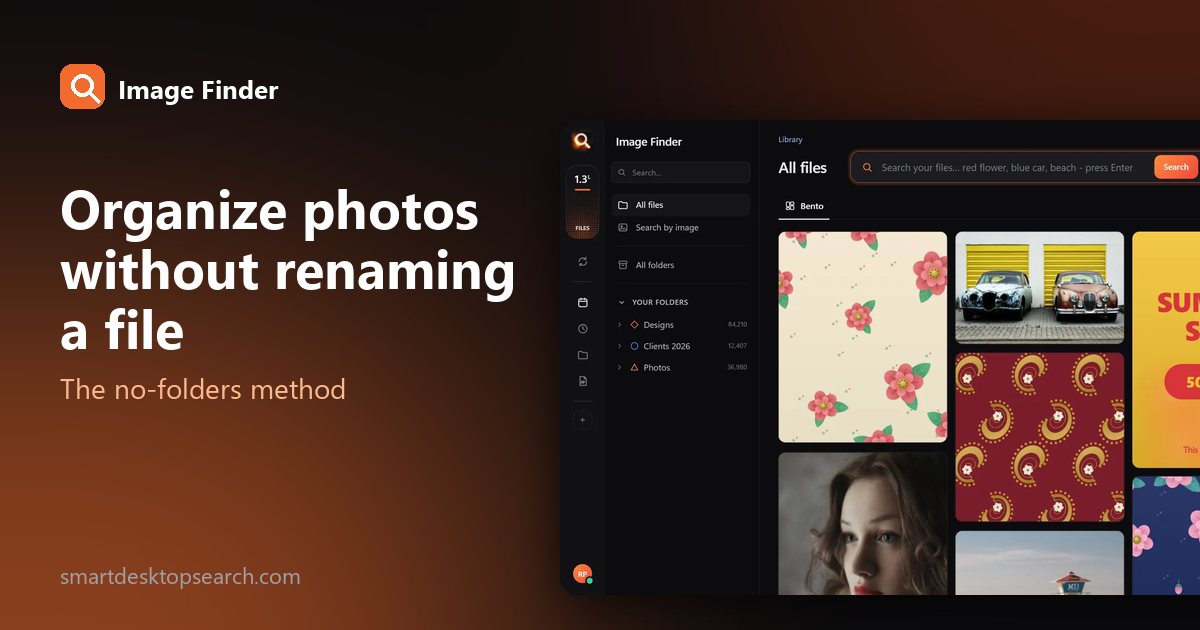
Instead of forcing every file into a perfect structure, keep a simple structure for new photos and let search handle everything else.

What "searchable" gives you
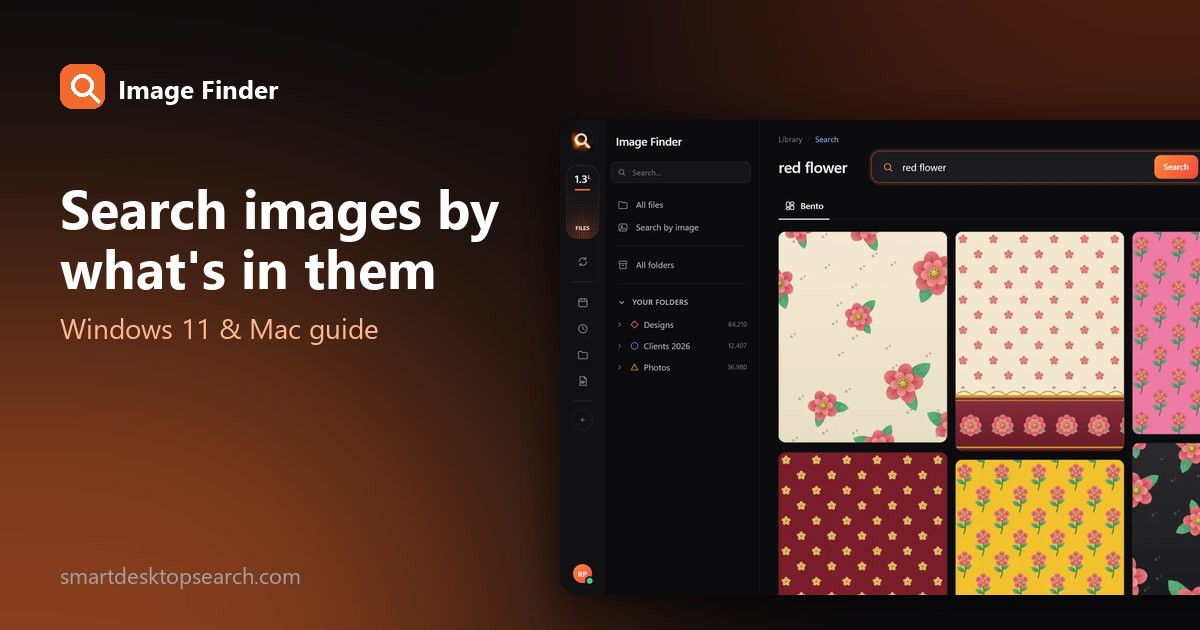
- By description: "birthday cake", "snowy mountains", "red car".
- By face: every photo of one person.
- By picture: drop in a photo and get every copy and look-alike.
- By color and type: narrow any search to blue pictures, or only PSDs.

A little structure still helps
Search does the heavy lifting, but three habits make it even better:
- One home for photos. Fewer places to add means fewer things to forget.
- Back up that home. Search helps you find things; only backups keep them safe.
- Keep originals. When you edit, save a new file instead of overwriting.
Where your photos are probably hiding
Before you search, make sure everything is in reach. Photos tend to collect in a few places:
| Where | What is usually there |
|---|---|
| Pictures / Photos folder | Phone imports, edits |
| Downloads | Pictures saved from email, chat and the web |
| Desktop | Screenshots and "temporary" files from years ago |
| External drives | Old laptops, camera cards, backups |
| Cloud sync folders | iCloud, OneDrive, Google Drive and Dropbox folders synced to your computer |
Add all of them. Image Finder keeps each folder and drive in sync by itself, so new photos are found within seconds of arriving.
A 30-minute weekly habit (optional)
Search makes strict organizing unnecessary, but a tiny routine keeps things pleasant:
- Empty the camera roll into your one photo home.
- Search "screenshot" and delete the ones you no longer need.
- Pick a face or an event and make a small album or PDF to share with family.
When folders still matter
Folders are still useful for projects you are actively working on and for what you back up. Keep active projects in clear folders; let search take care of the archive.
Questions people ask
What is the best way to organize photos on a computer?
For a small collection, dated folders and clear file names work well. For tens of thousands of photos, the most practical approach is to keep a light folder structure and use content search to find things by what is in them.
Do I need to tag my photos?
Not with content search. The app looks at the pictures itself. You can still add your own tags if you like them, but nothing depends on it.
Will organizing software move or rename my files?
Many photo managers import or reorganize files. Image Finder does not: it searches your folders where they are.
Windows and Mac. Private, offline, no subscription.