 +
+

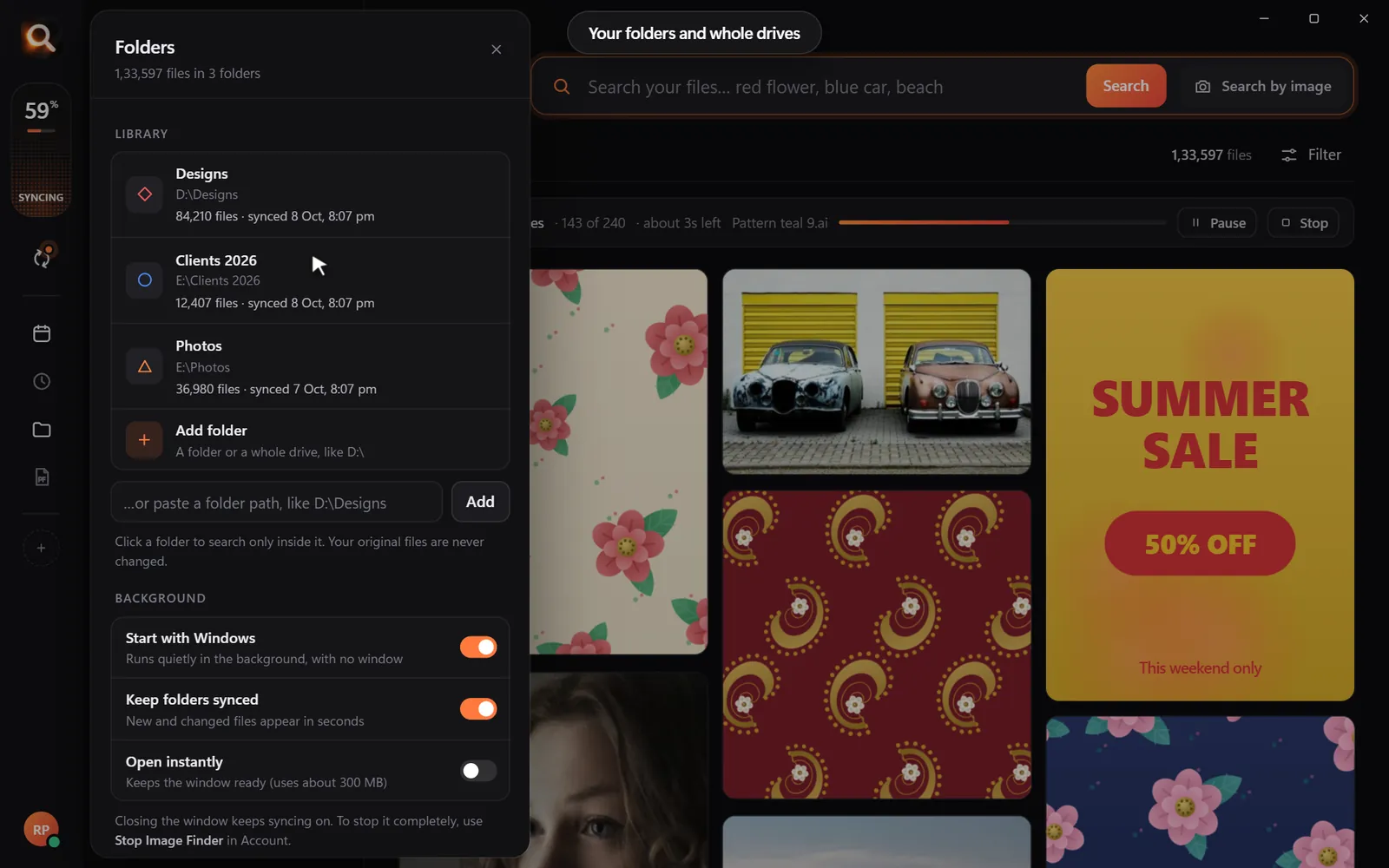
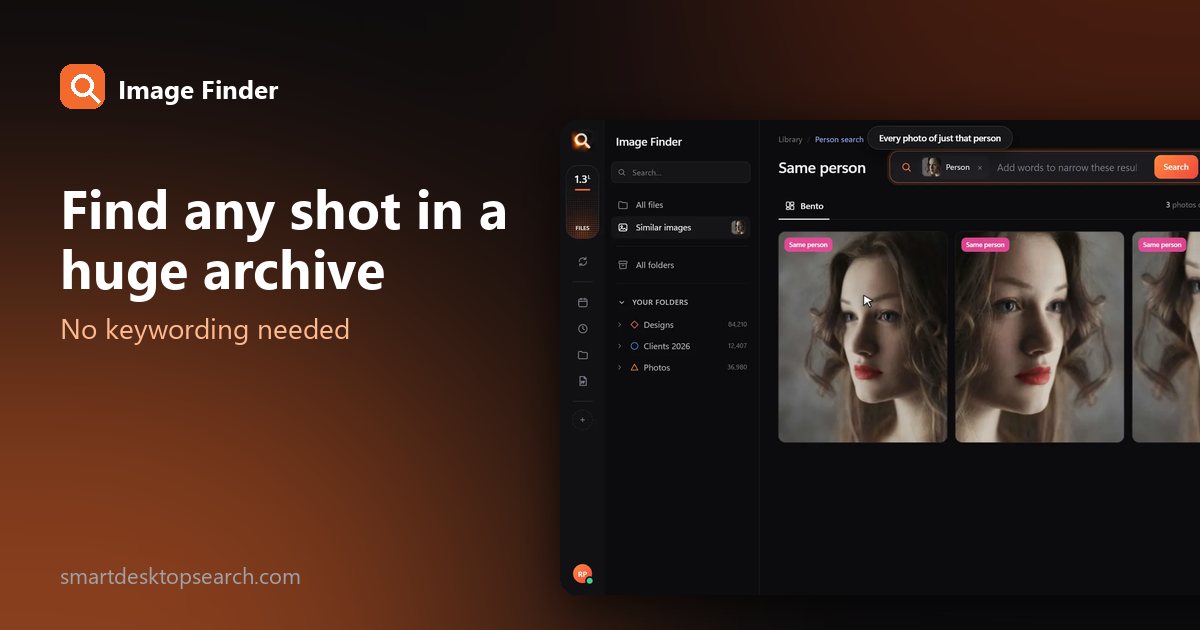
Every working photographer knows the email: "Could you send that photo of the bride's mother laughing - from the reception, maybe three years ago?" Your archive is organized by date and client, the shot is somewhere in 40,000 RAW files, and nobody keyworded it.
Here is how photographers find any shot in a large photo archive without keywording everything first.
Why keywording never catches up
Keywording works - for the shoots you finish keywording. In practice, deliveries come first and the archive grows faster than anyone can tag it. And a keyword you add today rarely matches the words a client uses years later.
0 hours a year spent looking for files - with a search that takes a second, that is about 0 working days back.
Three ways to find a shot without keywords
1. Describe it
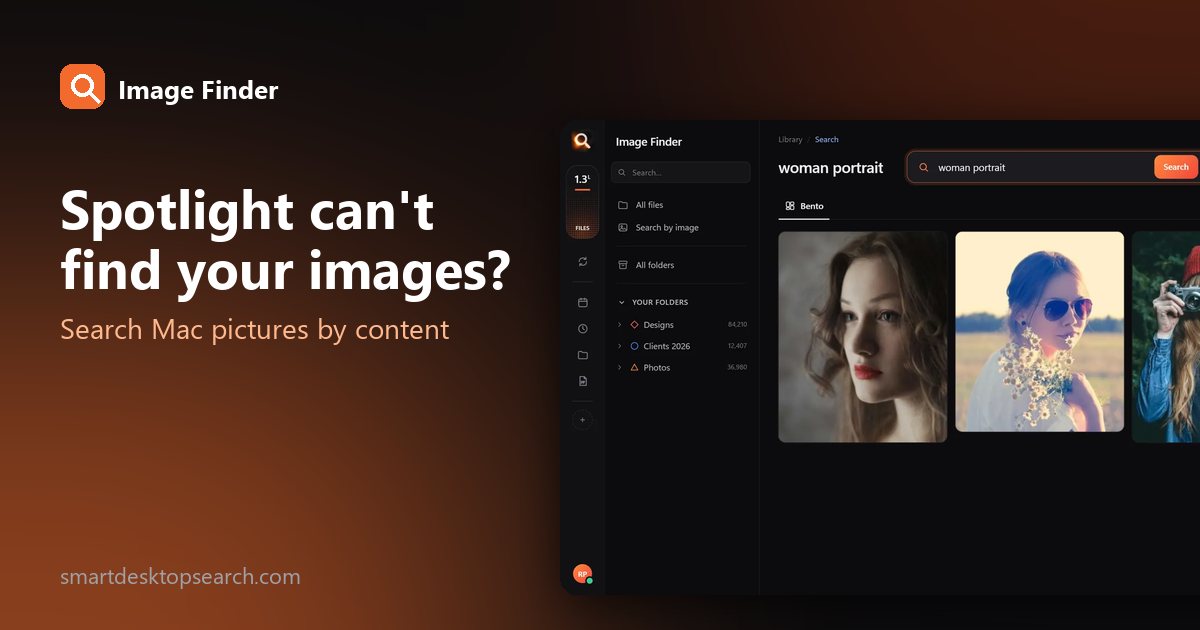
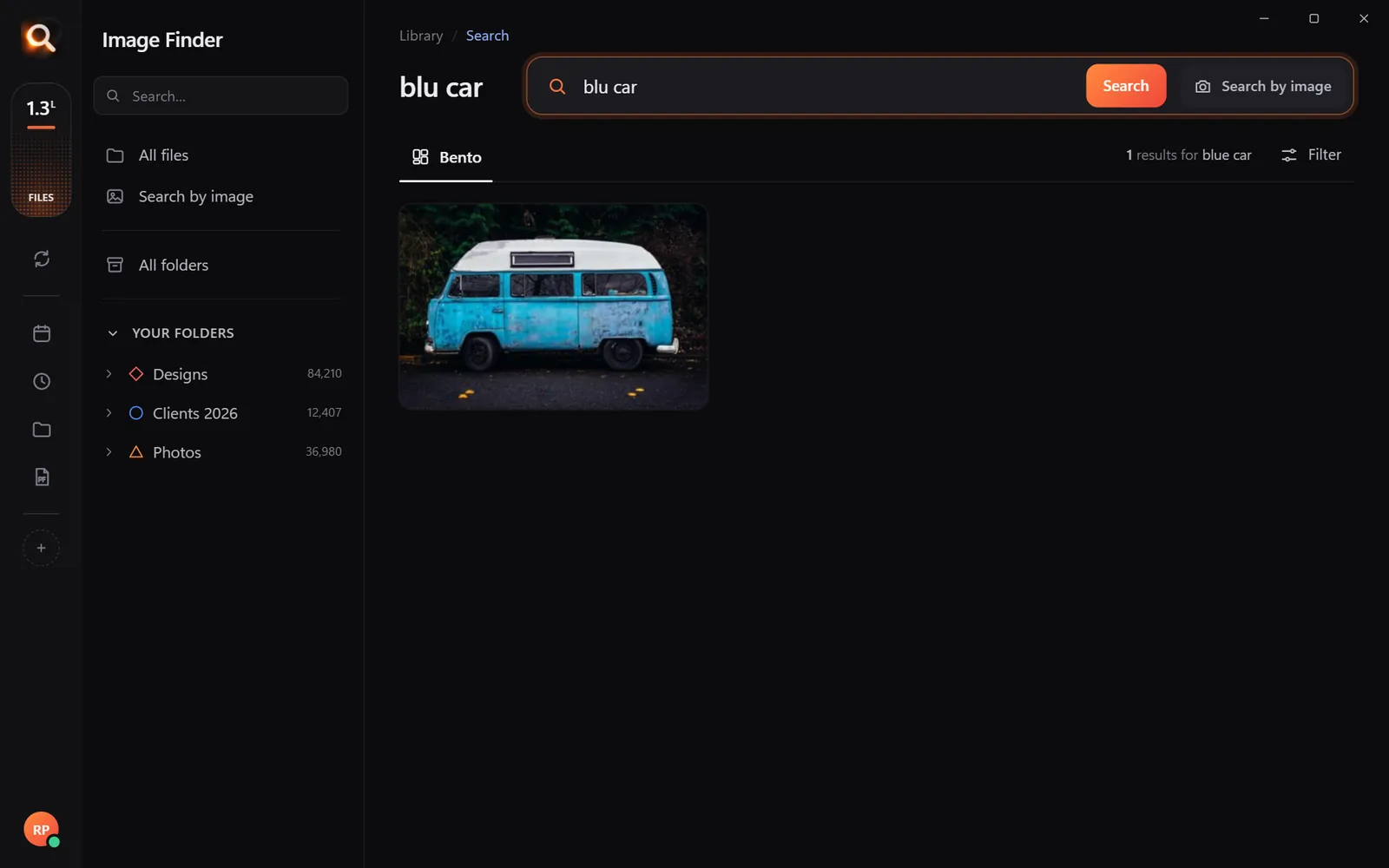
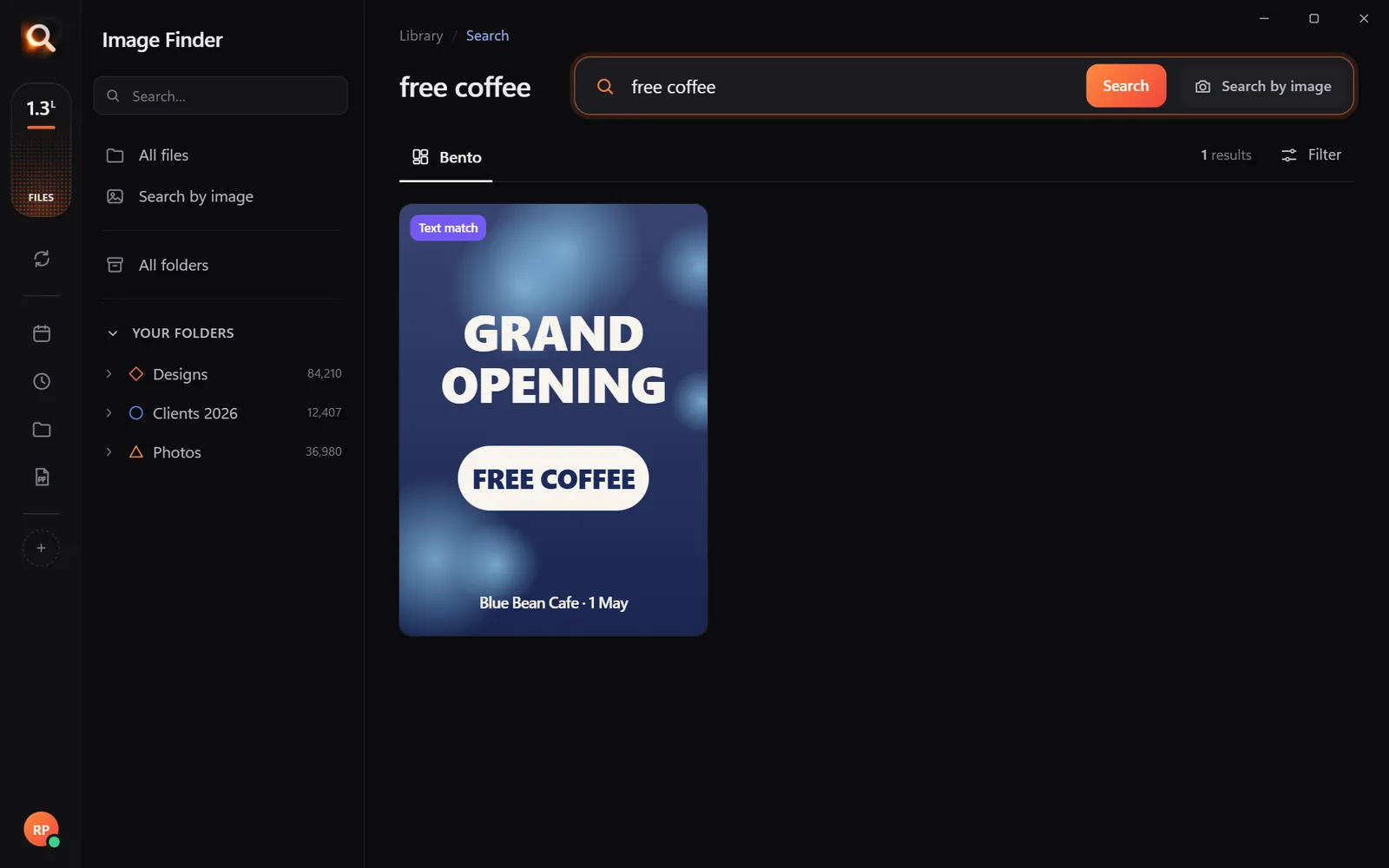
"Bride laughing outdoors", "kids on a beach at sunset", "black and white portrait with a hat". The search compares your words with what is in each photo.
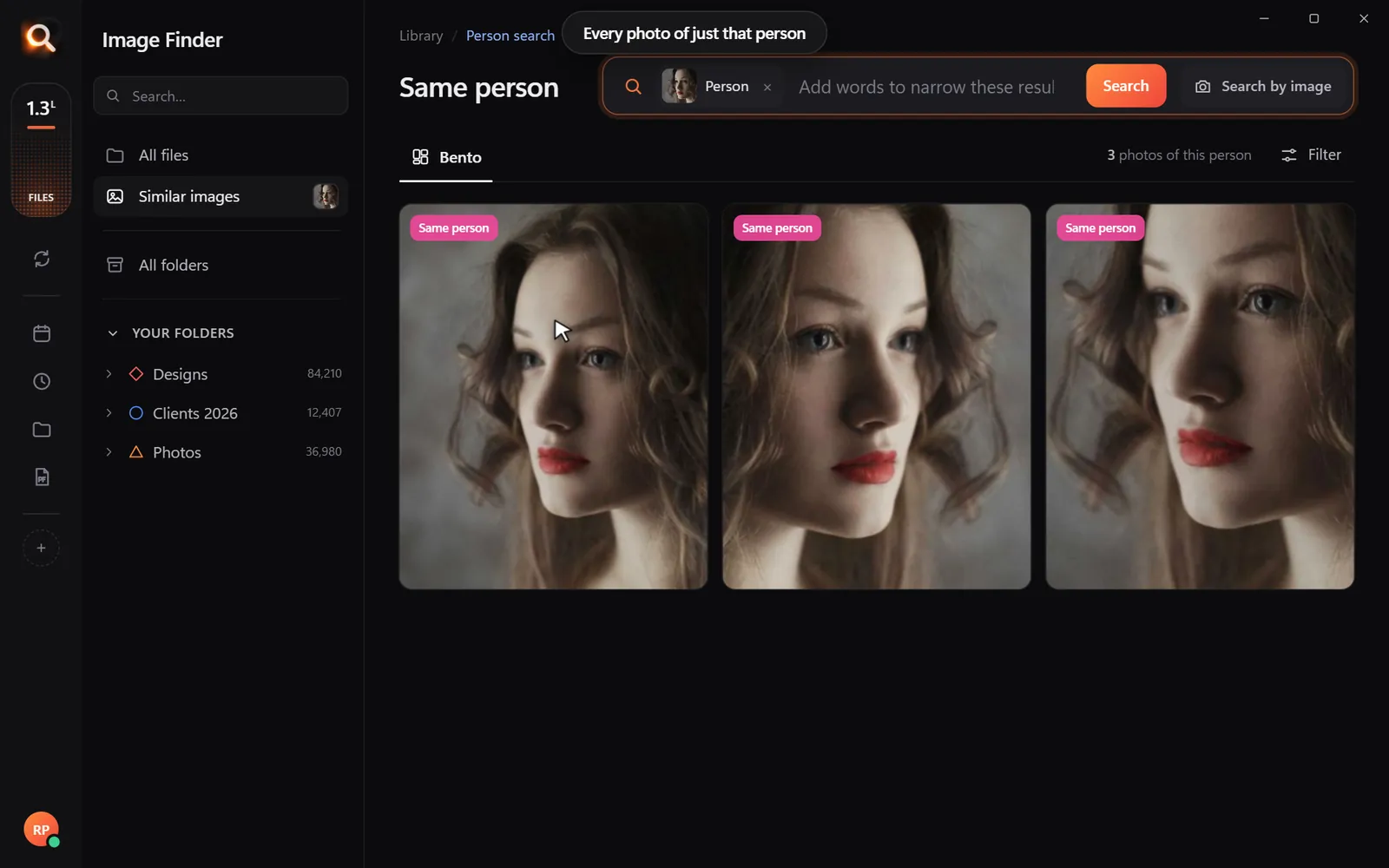
2. Pick a face
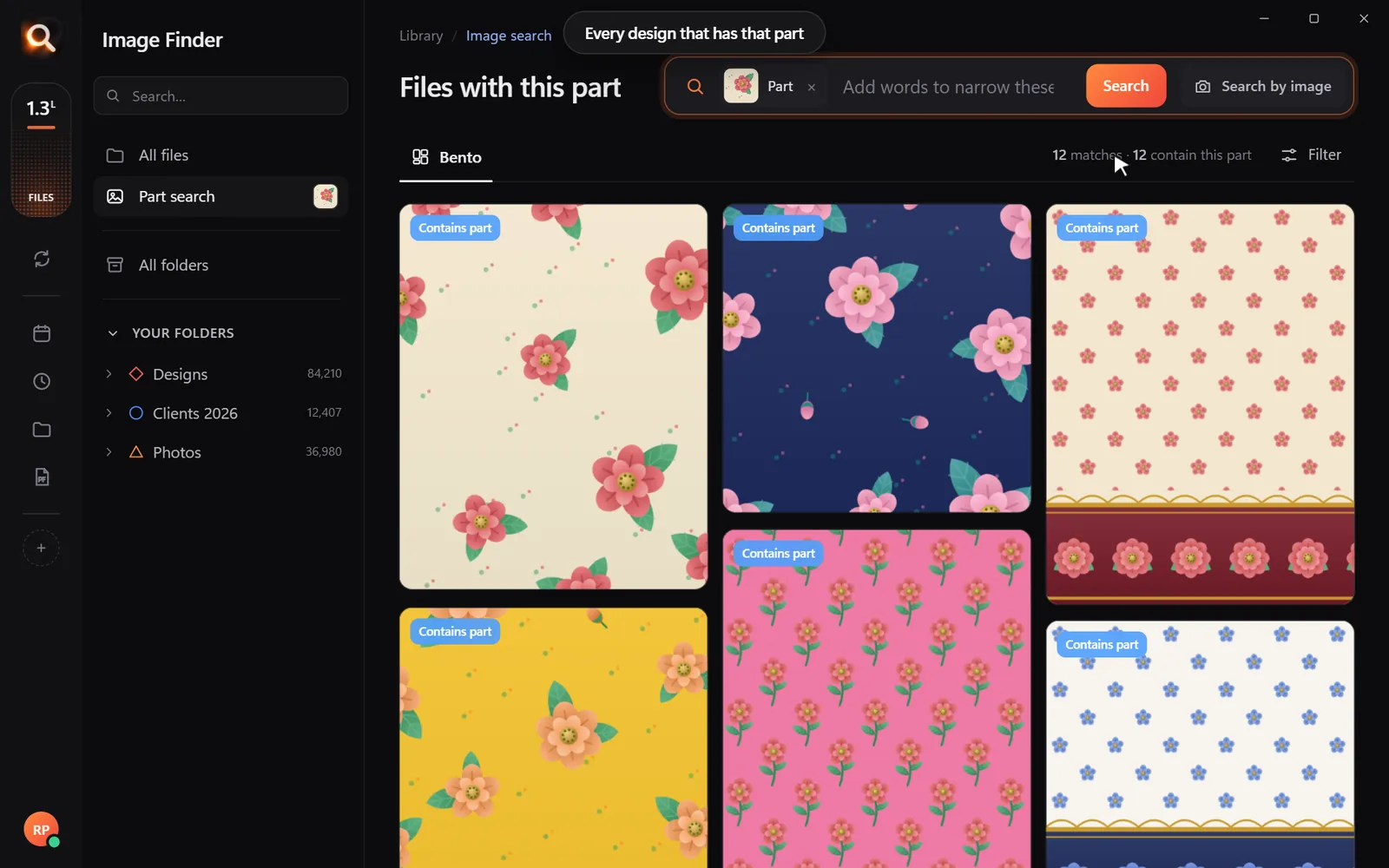
Open one photo of the person and choose Same person. Every photo of them across all shoots appears - add "reception" or "outdoor" to narrow it.
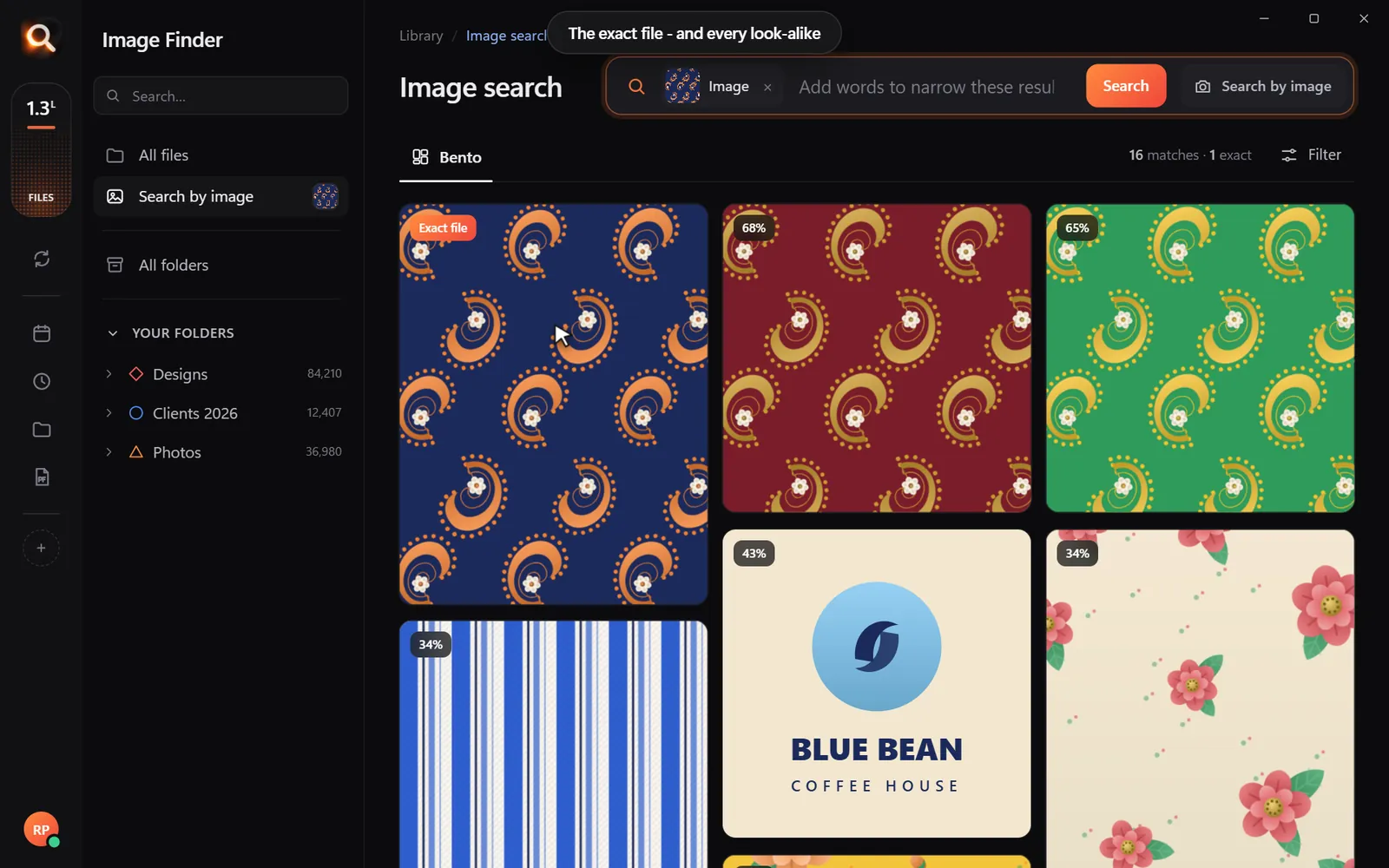
3. Use a reference picture
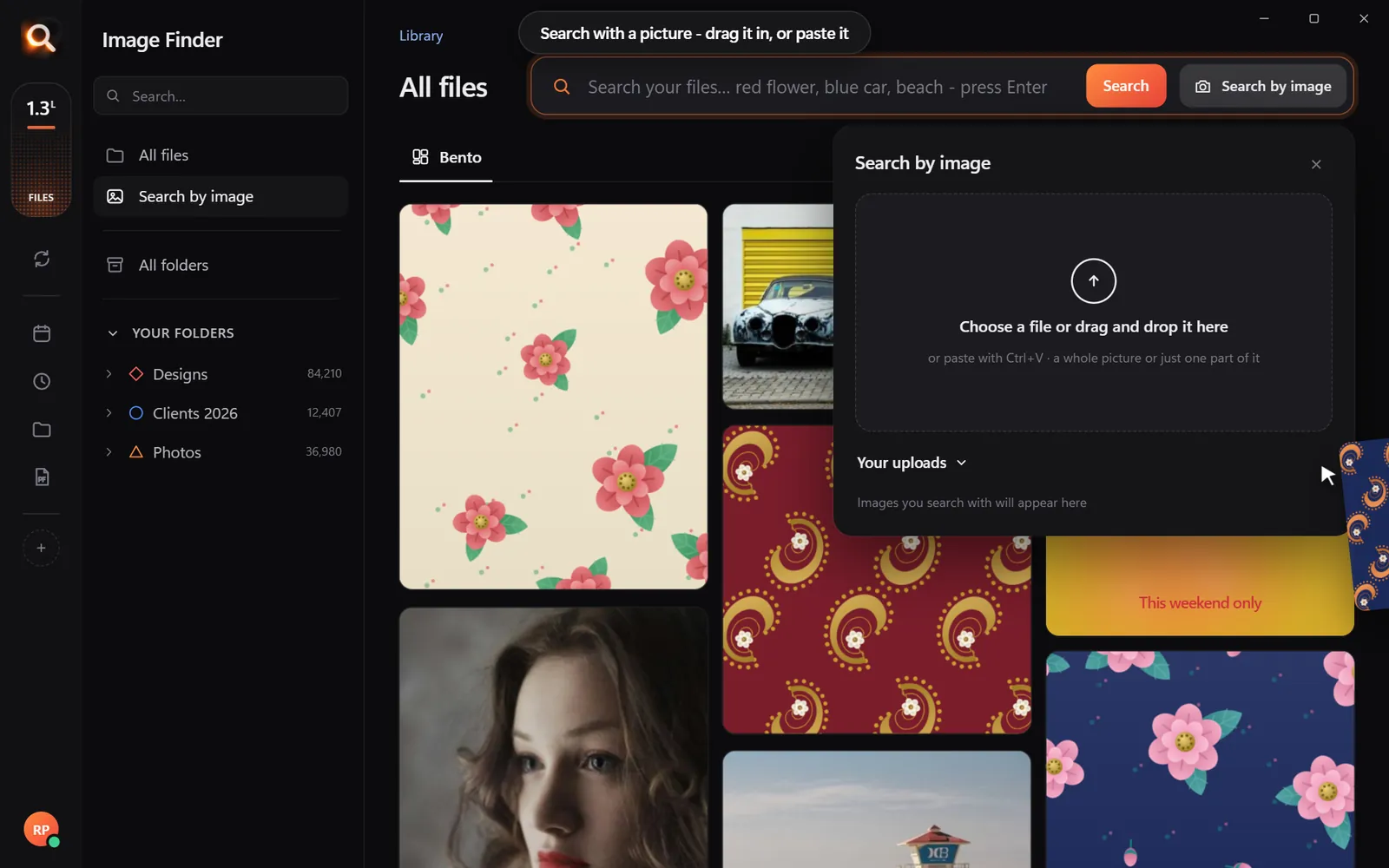
The client sends a phone photo of a print, or a low-res copy from social media. Drop it in - the original file comes first.
Works with your formats
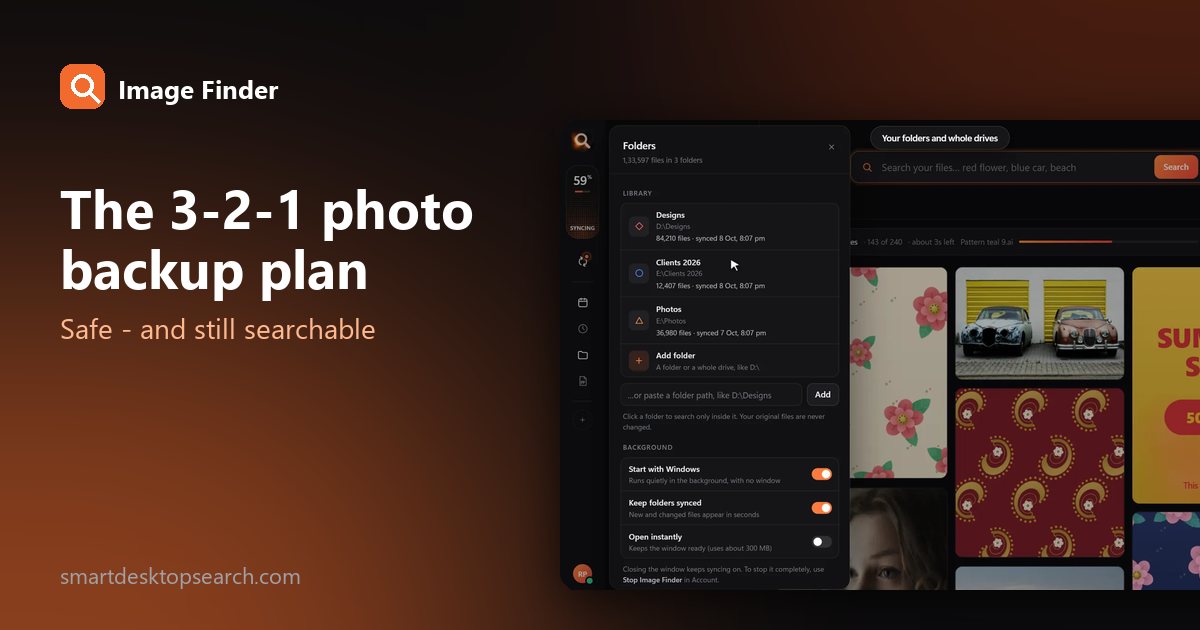
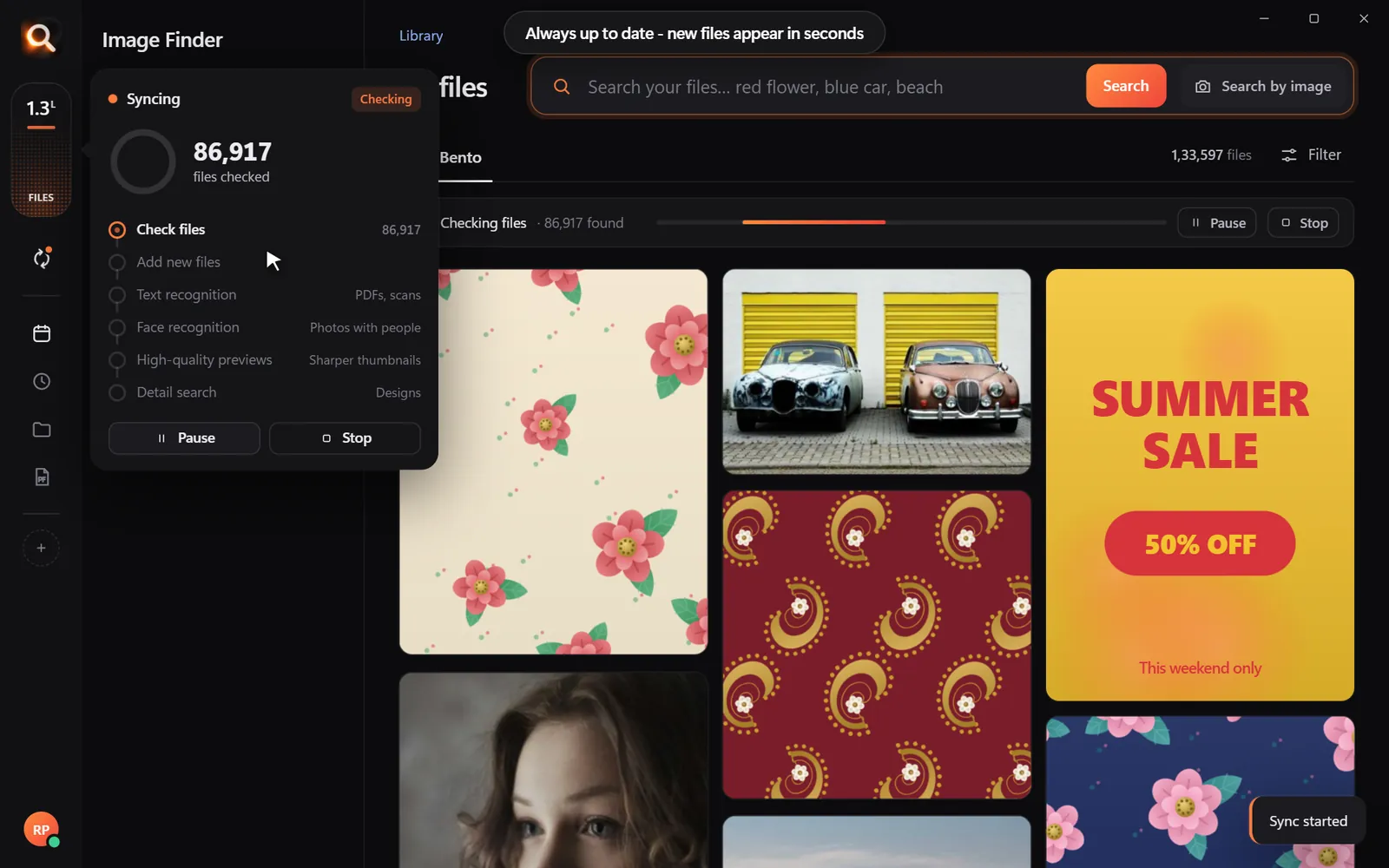
Image Finder searches camera RAW, JPG, TIFF, HEIC and PNG - plus your PSD edits and PDF proofs - in the folders and drives where they already are. Nothing is imported or moved, and your catalog app keeps working as before.
A workflow that fits around your catalog
Common requests - and how to answer them fast
| The client asks | Search |
|---|---|
| "The one of grandma laughing" | Pick grandma's face, add "laughing" |
| "Our team photo outside the office" | "group photo outdoors building" |
| "That sunset shot from the beach day" | "beach sunset" |
| "The photo on our old website" | Drop in a screenshot of the website |
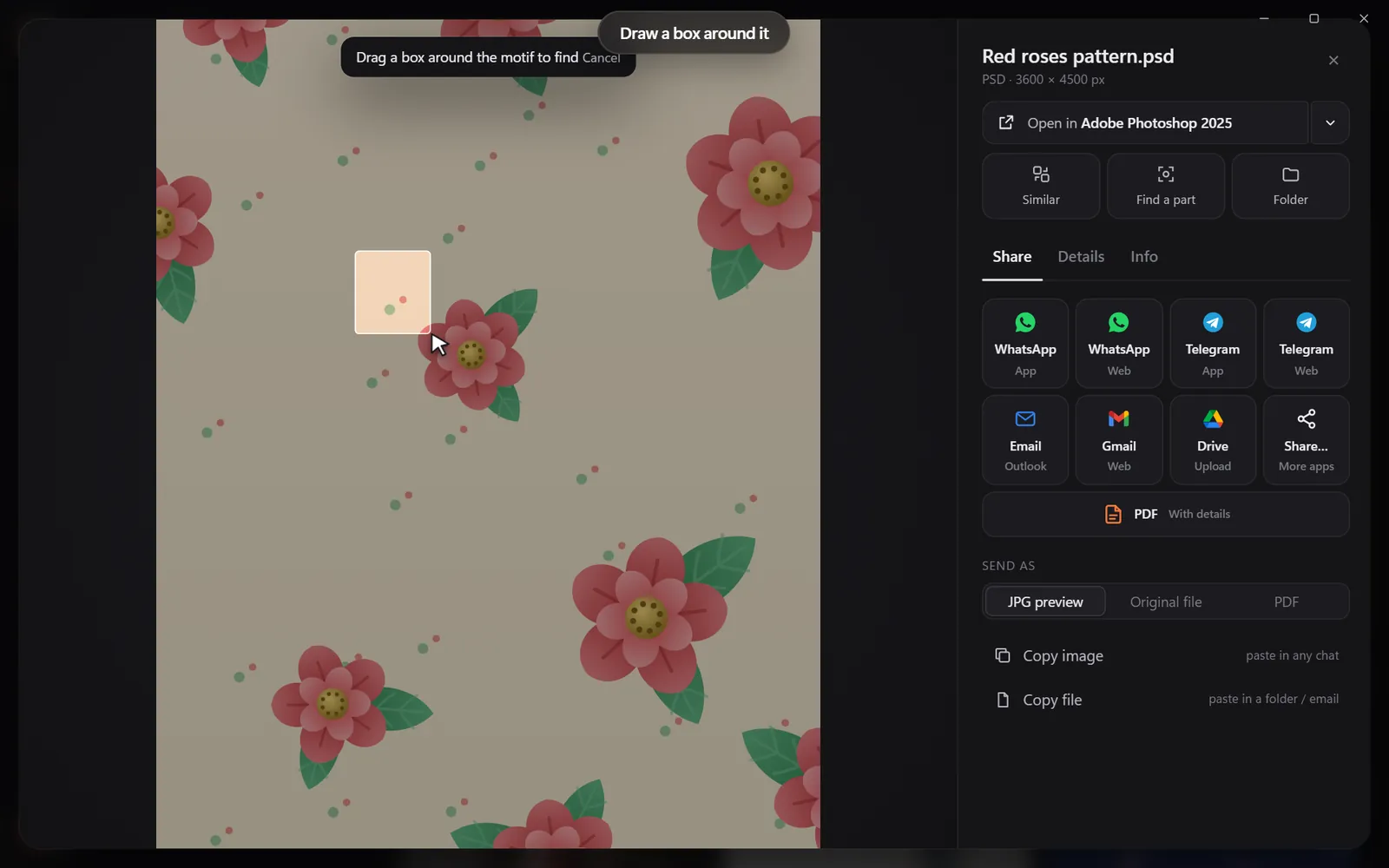
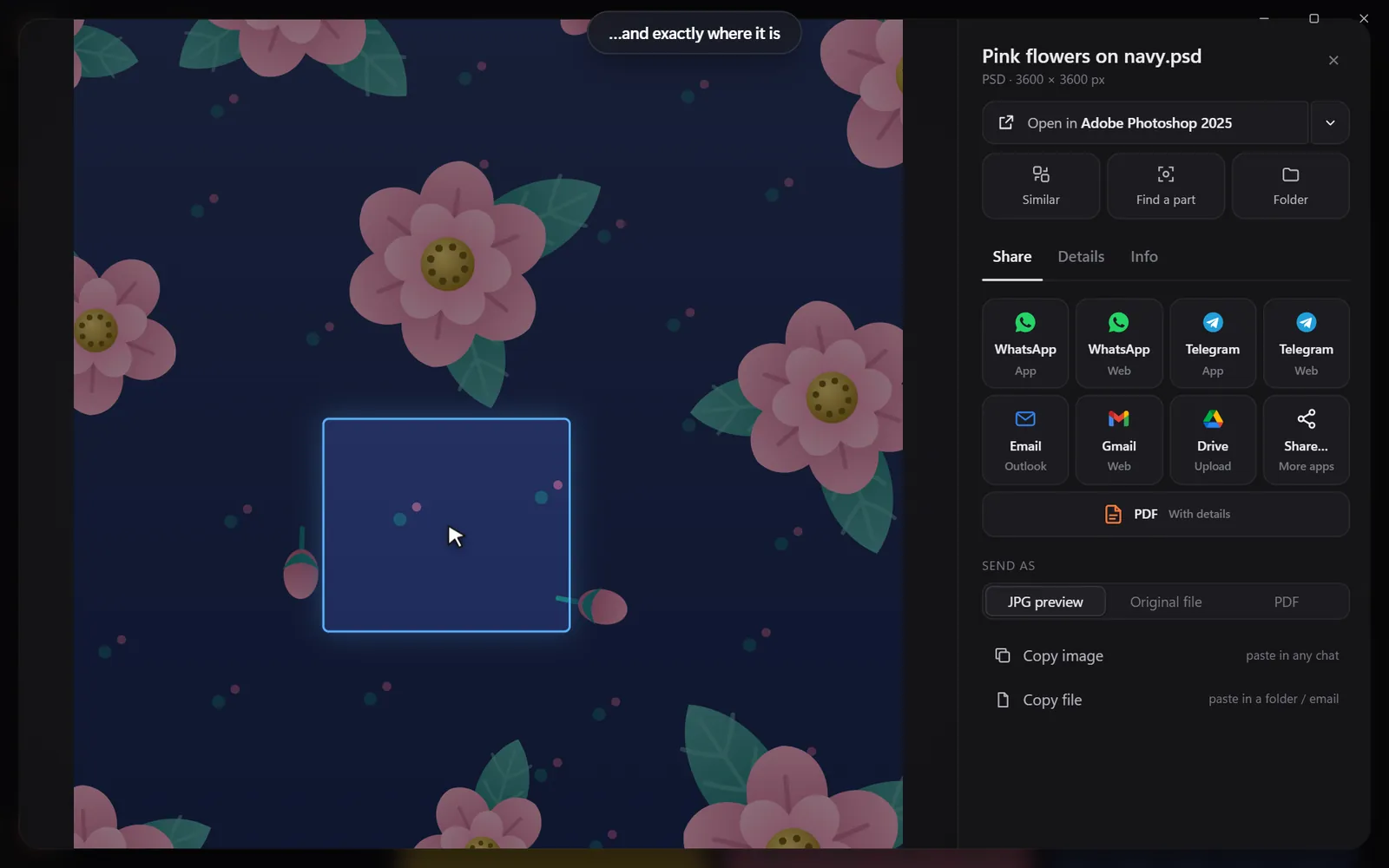
| "Every photo with our logo banner" | Draw a box around the banner |
Find your best work for a portfolio
Search your strongest themes - "silhouette", "black and white portrait", "mountain landscape" - across every year at once. It is a quick way to rediscover strong shots you forgot, without scrolling through whole shoots.
How a typical photographer's archive grows
It helps to be honest about the numbers. A busy wedding photographer shoots 40-60 weddings a year at 2,000-4,000 frames each - well over 100,000 RAW files a year before family sessions and personal work. A commercial photographer might deliver less but keep every version: RAW, edited TIFF, web JPG, client PDF proof.
After five years you have half a million files on four or five drives, organized by date and client. Every file has a camera name like _DSC4821.ARW.
0 hours a year spent looking for files - with a search that takes a second, that is about 0 working days back.
The most common archive requests (and the fastest answer)
| The request | Fastest search |
|---|---|
| "The photo of me with the blue dress" | Pick the client's face, type "blue dress" |
| "That sunset shot you posted last year" | Drop in the social media image - the original comes first |
| "All the photos with our logo" | Draw a box around the logo in one photo |
| "Every group photo from the reunion" | Describe it: "large group outdoors", narrow by folder |
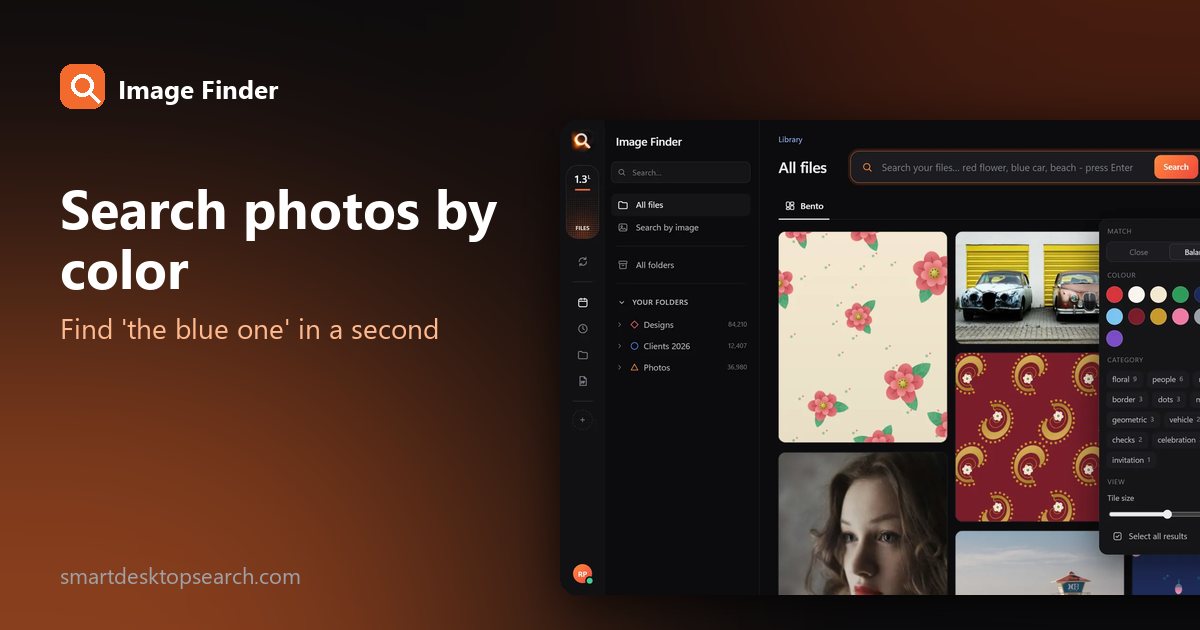
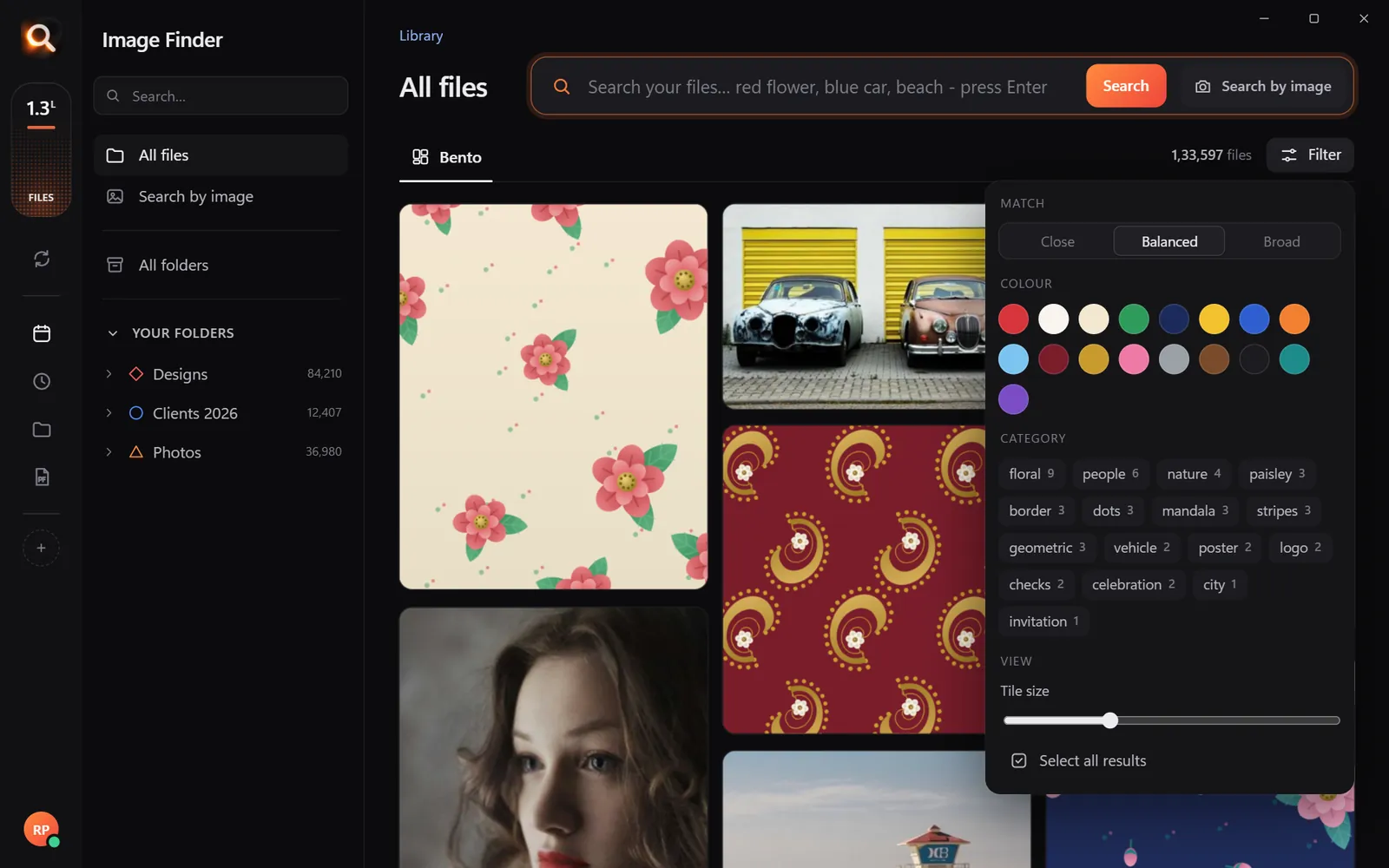
| "Something in black and white" | Filter by black/white, add a word |
Search across shoots, not inside one shoot
Lightroom, Capture One and Photo Mechanic are brilliant inside a shoot - for culling, rating and editing. They are much weaker when the question spans ten years and five drives, especially for drives that are not in the current catalog.
That is where a separate search layer helps. It does not replace your editor; it answers the question "where is that shot?" and then you open the file in your editor as usual.
Faces across the years
Same-person search is especially useful for photographers because clients come back: the couple you photographed at their engagement returns for their wedding, then newborn photos, then family portraits. Pick their face once and every session appears - perfect for an anniversary gift album or a "then and now" post (with permission).
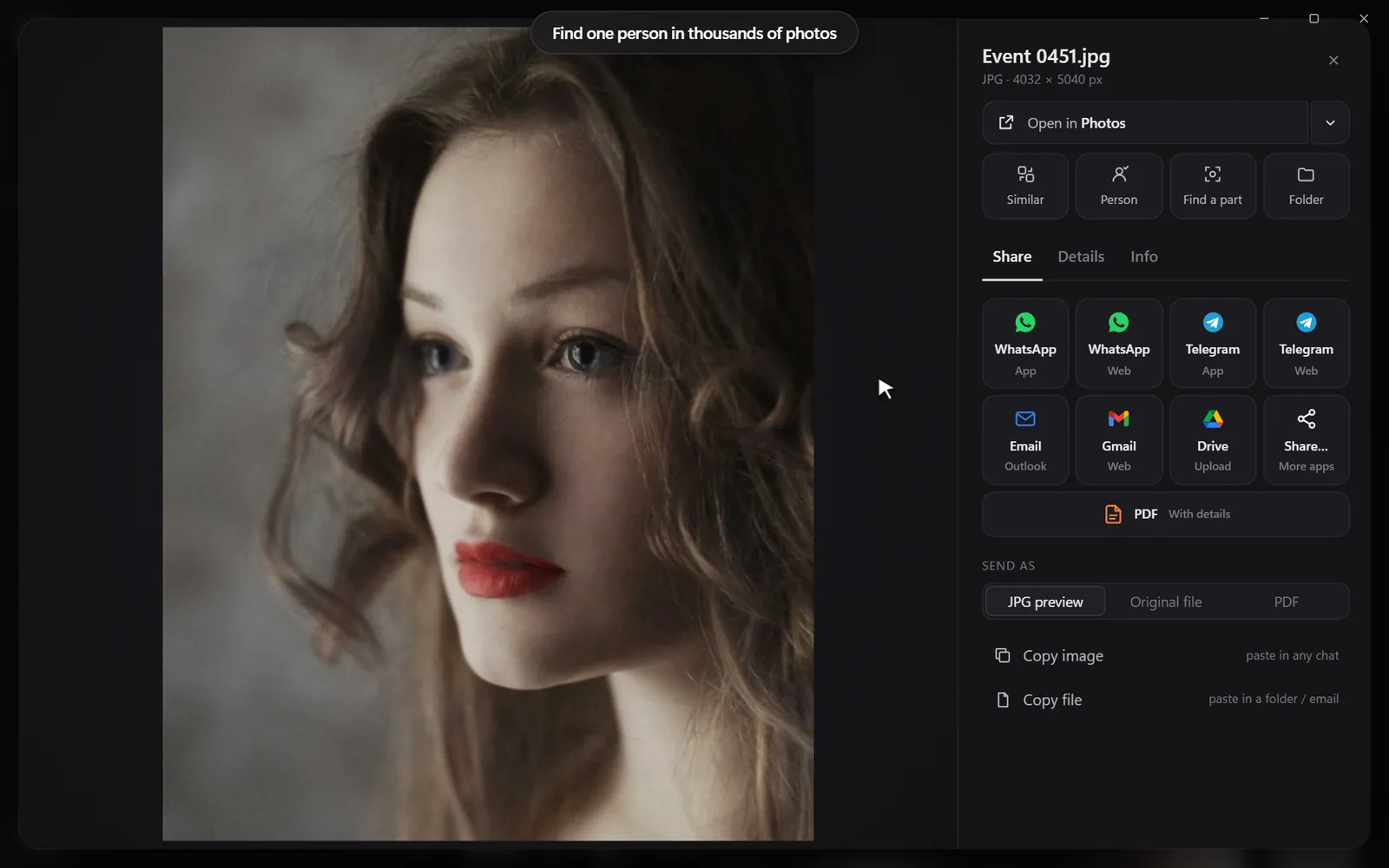
Portfolio building from a decade of work
Most photographers' best work is buried. Try these searches when you update your portfolio or website:
- "golden hour portrait", "backlit couple", "rain umbrella"
- "dramatic black and white"
- "children laughing", "first dance", "confetti"
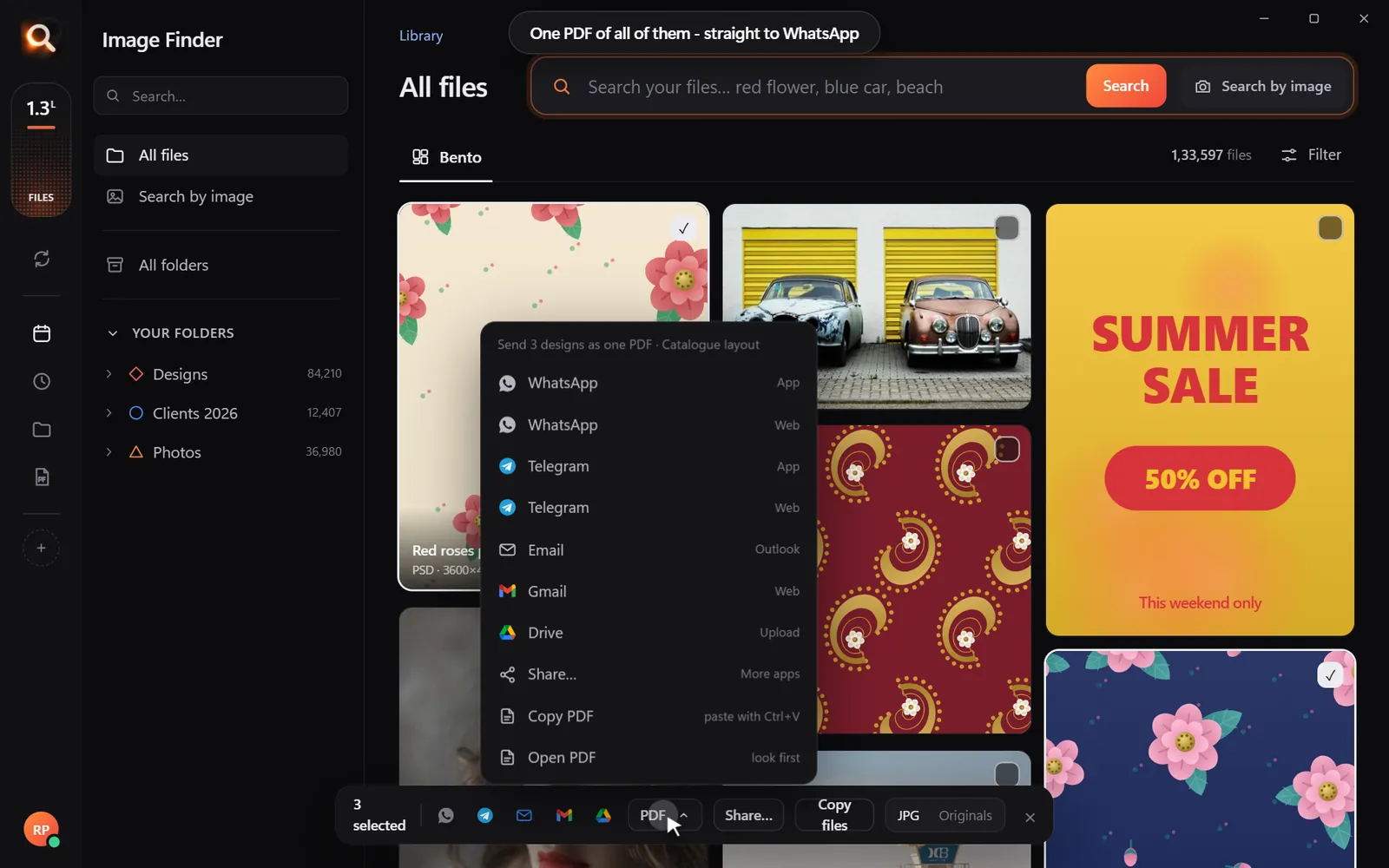
Select the strongest results and make a PDF contact sheet to compare them side by side.
Archive hygiene that pays off
Questions people ask
Do I have to keyword my photos to search them?
No. The search looks at the photos themselves, so unkeyworded shoots are just as searchable.
Does it work with RAW files?
Yes. Camera RAW files are searched like any other photo.
Will it change my catalog or files?
No. Image Finder only reads files. It never moves, renames or edits them, and it does not touch your catalog.
Does Image Finder replace Lightroom?
No. Keep editing and culling in your usual app. Image Finder answers "where is that shot?" across all your drives, then you open the file in your editor.
Can it search drives that are not connected?
It searches the pictures it has already looked at; connect the drive to open the full file. Keep archive drives connected now and then so new shoots are added.
Windows and Mac. Private, offline, no subscription.